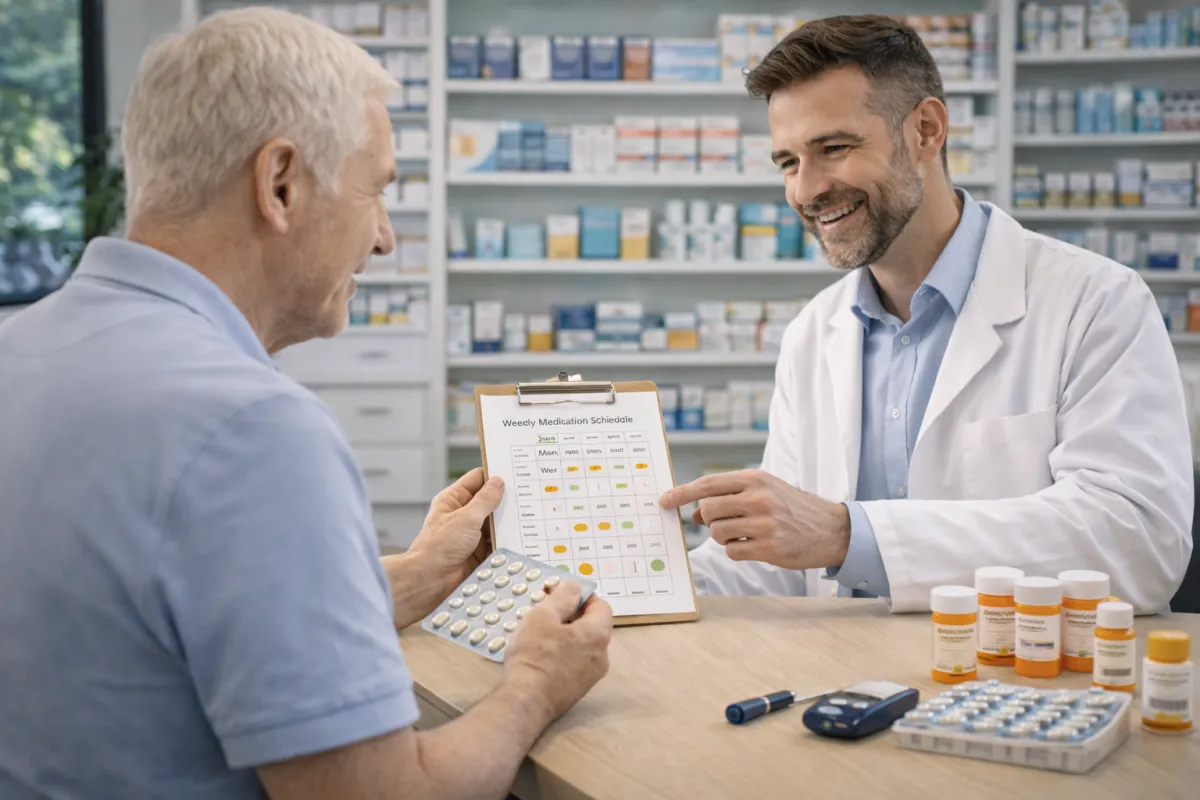
What Diabetes Supplies Should You Keep at Home? | Kressaty’s Pharmacy Haskell
If I live with diabetes, it is easy to focus on the prescription itself and forget everything else that actually makes daily care work.
But in real life, insulin or oral medication is only part of the picture. I also need the tools that help me check blood sugar, treat a low quickly, handle injections safely, and avoid the kind of last-minute scramble that turns a manageable day into a stressful one. The American Diabetes Association and CDC both emphasize keeping a diabetes supply kit that includes blood sugar testing supplies, medications, fast-acting glucose, and backup essentials at home.
That is exactly why this is such a practical topic for local patients. If I am looking for diabetes supplies in Haskell, NJ, blood sugar testing supplies in Haskell, or a pharmacy near Ringwood Ave that can help me stay prepared, I want more than a general checklist. I want to know what I should actually keep on hand all the time. Kressaty’s Pharmacy says it is located at 1068 Ringwood Ave #1, Haskell, NJ 07420, and its site highlights generics and diabetic supplies, free Rx delivery, and health screenings that include blood glucose monitoring.
Why a Home Diabetes Supply Setup Matters?
The biggest mistake I see is assuming that medication alone is enough.
It is not. A person can have insulin or tablets at home and still run into trouble if they do not also have test strips, lancets, a working meter, fast-acting sugar for lows, or the right disposal supplies. The CDC’s emergency diabetes checklist specifically includes a glucose meter, extra batteries, test strips, lancets, glucagon kits, ketone strips, alcohol wipes, and insulin delivery supplies as core items to keep available.
That matters because diabetes management is rarely about one item. It is a system.
1. Blood Glucose Meter
If I check blood sugar with fingersticks, a working glucose meter is one of the first things that needs to stay in the house.
That sounds obvious, but meters get misplaced, batteries die, and sometimes people assume they can “just tell” when blood sugar is high or low. The CDC and ADA both include a blood glucose meter as a basic diabetes-care essential.
For many patients, this is the center of the whole home supply routine. Without it, the rest of the plan gets harder to manage.
2. Test Strips
A meter without test strips is basically a paperweight.
That is why I always think of strips as a separate must-have, not an accessory. The CDC specifically lists blood sugar testing supplies as essential, and the ADA’s preparedness checklist says to keep supplies to check blood sugar, including testing strips, as part of a diabetes-ready home kit.
This is one of the most common supply gaps people run into. They still have the meter, but they do not realize they are down to only a few strips until they actually need them.
3. Lancets and a Lancing Device
People often remember the strips and forget the lancets.
If I check my blood sugar with a fingerstick, I need both lancets and the device that works with them. The CDC includes lancets and lancing devices on its diabetes emergency and care-preparedness list, and ADA materials also identify lancets as a standard diabetes-care supply.
In practical terms, this is one of those small items that becomes a big problem the moment it runs out.
4. Fast-Acting Glucose
This is one of the most important items in the house, especially if I take insulin or any medication that can cause low blood sugar.
The ADA says that if I am at risk for hypoglycemia, I should keep something containing sugar with me at all times, such as glucose tablets, fruit juice, or hard candy, so I can treat low blood sugar quickly. CDC school-management guidance says to keep glucose tablets or other fast-acting carbs like juice or hard candy as part of a diabetes supply checklist.
This is one of the easiest diabetic essentials to underestimate because people think, “I will deal with it if it happens.” But low blood sugar is exactly the kind of thing I do not want to be unprepared for.
5. Diabetes Medications and a Backup Supply
The medication itself still belongs on this list, of course.
The ADA preparedness checklist recommends keeping an additional week's supply or more of all medications, including insulin and glucagon if prescribed. CDC emergency guidance also says to keep oral diabetes medicines, insulin, and all other needed prescription medicines available.
I do not want to wait until the last tablet, pen, or vial to realize I am almost out. A backup cushion matters.
6. Insulin Supplies, Syringes, or Pens
If I use insulin, I need more than the insulin itself.
The CDC says patients should keep insulin and syringes for every injection, and also lists insulin pump supplies, extra pump sets, and insertion devices for people who use pumps. The ADA’s supply checklist similarly includes extra insulin pump or CGM supplies.
So if I use insulin, my home essentials may include:
insulin pens or vials
pen needles or syringes
pump supplies if applicable
a cooler or cold packs for emergencies or travel planning
7. Sharps Container
This is one of the most overlooked basics.
If I use lancets, pen needles, or syringes, I need a safe way to collect used sharps. People often think about disposal only after they start piling used supplies in drawers or makeshift containers.
While the search results I pulled focused more on medication and monitoring essentials than disposal rules specifically, safe sharps handling is a standard part of diabetes home care whenever needles or lancets are involved. I would never want used sharps loose in the house, especially in homes with children or other family members.
8. Ketone Strips
Not every patient uses ketone strips regularly, but for some people, they are very important to keep on hand.
The CDC specifically lists ketone strips in its diabetes emergency-care checklist, and CDC school-management guidance also includes ketone testing supplies in a diabetes checklist.
If my diabetes care team has told me to monitor ketones during illness, high blood sugar, or certain symptoms, I would consider these part of my permanent home setup, not an occasional add-on.
9. Glucagon Kit, If Prescribed
If I am at risk for severe low blood sugar and have been prescribed glucagon, that belongs in the home at all times.
The CDC includes glucagon kits on its diabetes emergency checklist, and the ADA’s preparedness sheet also says to keep glucagon if prescribed.
This is not something I want buried in a drawer where no one can find it. If it is part of my care plan, it should be easy to locate.
10. Alcohol Wipes and Other Small Basics
Small supplies are easy to forget until they are suddenly gone.
The CDC’s preparedness guidance includes alcohol wipes as part of a diabetes-care emergency kit.
This category also includes the little things that help keep the routine smooth:
meter batteries
backup charger if needed
tissues or cotton for fingersticks
a written medication list
a simple storage area where everything stays together
The ADA preparedness checklist even calls out extra batteries for blood sugar meters and pumps, which is a detail people often miss.
Do Not Forget a Backup Plan
One of the smartest things I can do is keep more than the bare minimum.
The ADA and CDC both approach diabetes supply planning with a preparedness mindset, not a “buy it when you run out” mindset. Their checklists are built around having enough supplies to handle normal days plus unexpected disruptions.
That is especially helpful in a home where:
prescriptions are monthly
delivery timing matters
the weather may make errands harder
someone depends on insulin or regular glucose checks
Why a Local Pharmacy Makes This Easier?
This is where a good diabetic essentials pharmacy Haskell patients can trust really matters.
Kressaty’s Pharmacy’s site highlights generics and diabetic supplies, free Rx delivery, and health screenings with blood glucose monitoring. That combination is practical because it supports both the prescription side and the supply side of diabetes care.
If I am looking for blood sugar testing supplies, Haskell, or a pharmacy near Ringwood Ave, I want a place that can help me stay stocked before something runs out, not after.
My Basic At-Home Diabetes Supply Checklist
If I wanted the shortest, most practical version, here is what I would keep at home:
glucose meter
test strips
lancets and a lancing device
diabetes medications
insulin supplies if used
fast-acting glucose like tablets or juice
ketone strips if recommended
glucagon kit if prescribed
alcohol wipes
extra batteries or charging accessories
sharps container
a small backup supply of essentials
That checklist is grounded in the CDC and ADA supply recommendations for ongoing care and emergency readiness.
Final Thoughts
If I live with diabetes, I do not want to think only about the prescription bottle.
I want to make sure the entire support system is in the house: testing supplies, low-blood-sugar rescue items, injection or insulin basics, and backup essentials that keep the routine from breaking down. The CDC and ADA both make it clear that diabetes care depends on keeping those supplies ready, not scrambling for them after something runs out.
And for anyone searching for diabetes supplies in Haskell, NJ, blood sugar testing supplies in Haskell, or a pharmacy near Ringwood Ave, Kressaty’s Pharmacy’s Haskell location, diabetic supplies, free delivery, and glucose-related services make it a strong local resource.
This article is for educational purposes only and does not replace medical advice. Your exact diabetes supply needs depend on your medications, monitoring plan, and care team instructions.
